
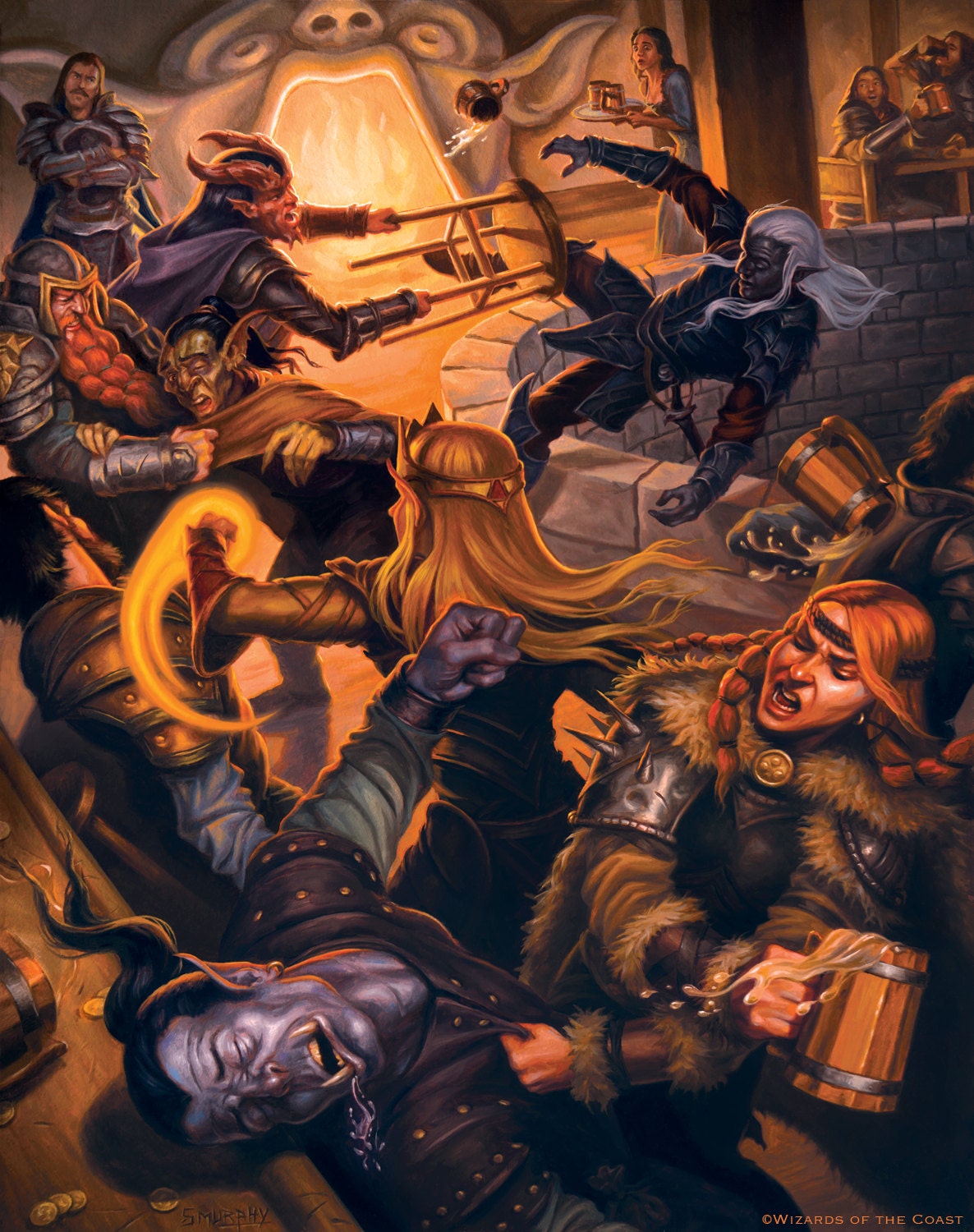
Let’s not pretend you don’t already know one.
You’ve seen him.
You’ve been him.
Or he’s currently sitting at your table sharpening a dagger while the quest-giver is mid-sentence.
A murder hobo is a Dungeons & Dragons character with:
-
No home
-
No job
-
No moral compass
-
And a disturbing willingness to solve everything with violence
Tavern owner won’t give you a discount? Dead.
Guard asks for papers? Dead.
Suspicious child in an alley? …also dead.
And somehow this person is “Chaotic Good.”
Where Did the Term Come From?
The phrase popped up in early online RPG forums in the 2000s, especially around D&D 3rd edition culture. The logic was simple:
-
Player characters wander from town to town
-
They have no permanent residence
-
They accumulate wealth by killing things
-
They rarely engage with society beyond “what’s the XP yield?”
Thus: murder + hobo.
It stuck because it’s accurate.
The Classic Murder Hobo Traits
If your party checks three of these, congratulations, you’re running a traveling war crimes tribunal.
1. Zero Backstory, Maximum Body Count
Their tragic orphan origin story lasts exactly 12 seconds before they attempt to intimidate a priest.
2. Loot First, Ask Questions Never
The NPC isn’t a character.
He’s a walking coin purse with dialogue flavor text.
3. “I Roll to Attack” Is a Personality
Roleplay is for bards. Violence is for results.
4. Alignment Is Decorative
“Chaotic Neutral” is often code for
“I want to derail the campaign without consequences.”
5. Every Encounter Is Treated Like Diablo
If it moves, it’s XP.
If it doesn’t move, check it for secret doors.
Why It Happens
Let’s be honest. A few reasons.
🎲 Video Game Brain
Modern players grew up on Skyrim and GTA. NPCs respawn. Consequences reset. You can quicksave before committing arson.
Tabletop doesn’t work like that.
Your DM remembers.
🧠 Lack of Stakes
If the world doesn’t react, players escalate.
If there’s no social web, no relationships, no consequence… it becomes Grand Theft Wagon.
🧔 Gen X Reality Check
Back in the day, in 1st edition AD&D, murder hoboing got you killed.
You stab the town guard?
Cool. The other 40 guards show up. With crossbows.
Roll a new character.
Modern D&D leans cinematic. That’s not bad. But sometimes the guard is suspiciously level 2 forever.
Is Murder Hobo Always Bad?
No. And here’s where it gets uncomfortable.
Sometimes murder hobo energy is:
-
Players blowing off steam
-
Testing system boundaries
-
Reacting to railroaded plots
-
Or just trying to feel powerful
Sometimes it’s a symptom, not the disease.
If players feel like nothing matters, they’ll start lighting things on fire just to see smoke.
The Difference Between Chaos and Stupidity
There’s a line.
Chaotic Fun:
-
Picking fights with a crime lord you can’t beat
-
Stealing a dragon egg and immediately regretting it
-
Bluffing your way through a cult meeting
Murder Hobo Stupid:
-
Killing the quest giver
-
Slaughtering random villagers
-
Derailing the campaign for five sessions because “that’s what my character would do”
Pro tip:
If your character is an unhinged sociopath, that’s fine.
But remember — the other players signed up for a game, not your Joker origin story.
How DMs Can Fix It
You don’t fix murder hobos by lecturing.
You fix it by consequences.
1. Reputation Systems
You burn a village? Word spreads.
2. Law Enforcement That Isn’t Made of Paper
Guards can call for backup. Kingdoms have resources.
3. Make NPCs Matter
Give them names. Families. Hooks.
It’s harder to stab “Merrin the baker who saved your life” than “Generic Peasant #4.”
4. Give Players Real Agency
If the only path forward is violence, they’ll take it every time.
The Hard Truth
Sometimes the murder hobo isn’t the problem.
Sometimes the table is bored.
Sometimes the campaign lacks emotional hooks.
Sometimes the DM is burned out and phoning it in.
Sometimes “That Guy” just needs a different table.
And sometimes…
you just want to roll dice and watch goblins explode.
That’s okay too.
Gen X vs Modern Murder Hobo
Old school:
-
You killed the wrong person
-
The world killed you back
-
End of story
Modern:
-
You kill the wrong person
-
DM adjusts
-
Story continues
Neither is wrong. But they create very different cultures.
Gen X tables often leaned survivalist.
Modern tables lean cinematic sandbox.
Know which one you’re running.
Final Verdict
A murder hobo is what happens when:
-
Power fantasy outruns story
-
Consequences disappear
-
Or players treat the world like a loading screen
But sometimes?
It’s just chaotic fun with friends.
If your table is laughing, invested, and coming back next week — you’re fine.
If your DM is quietly googling “how to TPK without looking petty” — you might have a problem.
And if you’re going to embrace full murder hobo energy?
At least own it.
Roll initiative.
From the Table: